






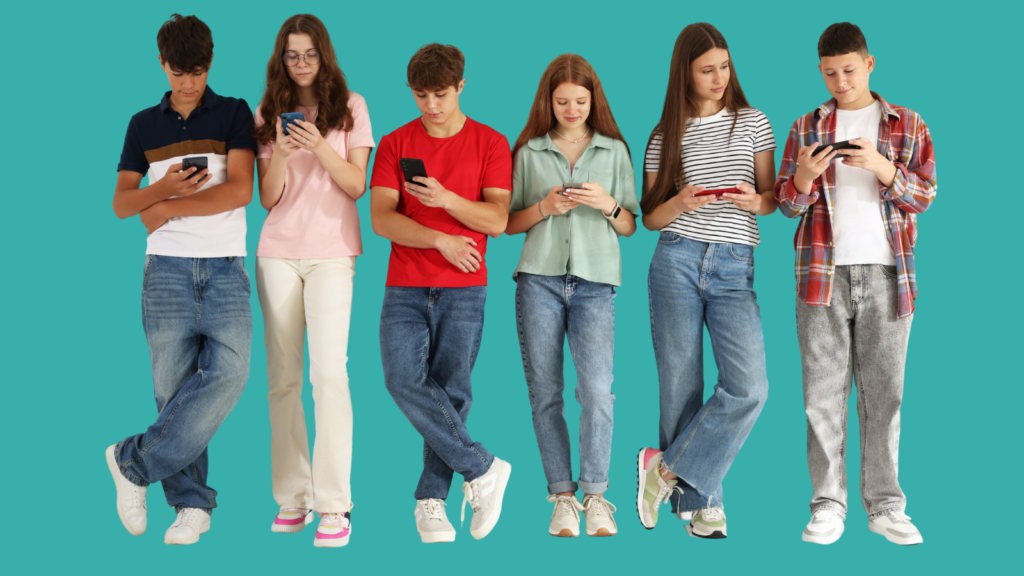
A ‘quiet’ revolution is underway in schools around the world. While the debates over digital learning rage on, a growing number of governments and education systems have taken a bold stance: phones off, and out of sight. New GEM Report analysis in this blog shows that, while one in four countries had smartphone restrictions in schools in 2023, this number has surged. Today, more than half of countries have policies restricting phone use in schools.
The wave of change on smartphone use in schools reflects the increasing concerns of parents, teachers and policy makers about the adverse effects of phones and social media on academic engagement and learning, social interactions, sleep, mental health, cognitive abilities privacy – to name but a few. The 2023 GEM Report’s gender edition argued that girls were twice as likely as boys to suffer from eating disorders exacerbated by social media usage. Facebook’s own research had revealed that 32% of teenage girls felt worse about their bodies after using Instagram. The report further noted alarming trends related to TikTok’s algorithm, which targets teenagers with body image content every 39 seconds and promotes content related to eating disorders every eight minutes.
Excessive screen and social media use not only affects individuals but also impacts the economy. Due to effects on workplace productivity, individuals’ perceived well-being and mental health, the annual cost to the economy of the United States as a result of screen use was estimated at USD 73 billion. Recent estimates suggest that the negative impact on children’s mental health and cognitive abilities currently costs 0.6% of GDP to France and could rise to 2.3% of GDP by 2060.
On the launch of the 2023 GEM Report on technology in education, the accompanying mapping of the PEER country profiles showed that 24% of countries had smartphone restrictions in schools. However, our latest monitoring results show that this number has surged, with 52% of countries now implementing policies to restrict phone use in schools, a significant increase.
Made with Flourish • Create a chart
The Netherlands implemented a ban in secondary schools in January 2024 and extended it to primary schools a few months later. The city of Zhengzhou in China demanded written parental consent for any phone use in schools. Chile, Denmark, Ecuador, Ethiopia, France, Finland, Italy and the Republic of Korea have all recently passed or tightened bans. Bulgaria already has a ban but is tightening it to cover other smart devices.